Posts

Innovating Food Production with Drip Irrigation in Guyanese Prisons

Image
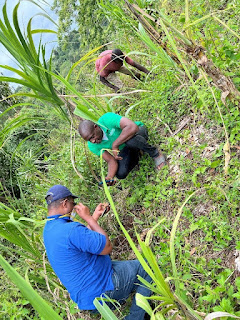
 By: F2F Guyana Volunteer, John Tiedeman - Redding, CA My assignment with the F2F Guyana program was from Jan 15 - 29, 2023. The focus was to introduce drip irrigation on prison farms to increase food production for people experiencing incarceration. An additional goal was to provide training to prison staff and the people who were incarcerated. The conditions for drip irrigation on orchard and vegetable crops at Timehri prison were well-suited for drip:   sandy soils and limited water supply. Due to lack of regular irrigation, crops in full sun were stunted or dead. Hand watering and portable lawn sprinklers make it difficult to maintain consistent, uniform irrigation required on sandy soils (low water holding capacity). We set up a small gravity-fed drip system to demonstrate the uniform application possible with drip irrigation. Other methods attempted (flooding, small holes drilled in pvc pipe) have proven unsuccessful. Our next step was to measure both pre...
Five Marketing Lessons from Working with Cacao Producers in Colombia

Image
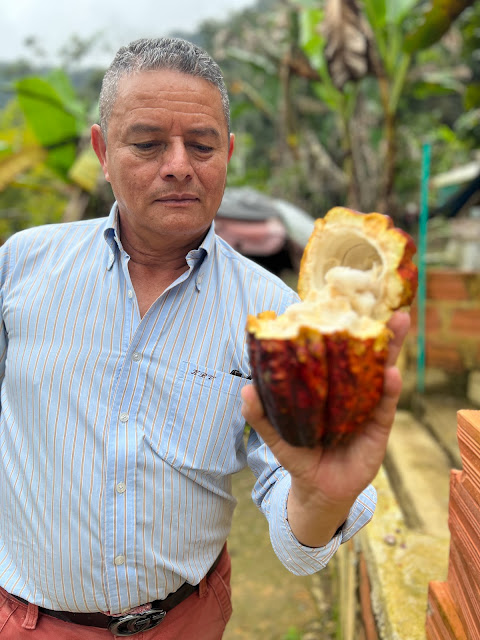
  By Tasha Prados After fifty years of violence, many farmers in Colombia were trapped growing illicit crops—the coca used to make cocaine. In 2014, one farmer in Otanche realized he needed a change. Don Pedro ripped out all the coca from his land and planted cacao (the seed used to make chocolate). It was a risky move: it takes 30 months for cacao to mature. As Don Pedro and others grew their cacao production, they formed the Cooperativa Integral de Productores Agropecuarios de Otanche (Cipaotanche). Now, nearly a decade later, the Cipaotanche cacao association has 70 members and produces bean-to-bar Quincha chocolate . When Partners of the Americas reached out to me to support Cipaotanche with their marketing strategy via the USAID Farmer-to-Farmer program, I was skeptical. I was doubtful that two weeks was enough to generate impact, and I was sure that there were Colombian marketing specialists who were also well positioned to support Cipaotanche. However, I was excited t...

Pollinating Peaches: New Avenues for Beekeeping in Guatemala

Image
Farmer-to-Farmer Volunteers, Carolyn Breece and Ellen Topitzhofer support Guatemalan beekepers from MOSCAMED Keeping honey bees can provide economic opportunity in several different ways, depending on your locale and situation. In areas with intensive agriculture, honey bees are crucial for proper pollination, and crop growers will rent colonies during the pollination period. Everywhere else, honey bees can provide their keepers with honey, wax, and other hive products to sell or consume. When we heard of the opportunity to volunteer with Farmer-To-Farmer, we were thrilled at the chance to learn about beekeeping in Guatemala. How did honey bees fit into their agriculture and local economics? Was migratory pollination a thing in Guatemala? Did their bees produce a lot of honey? How do they deal with Africanized bees?  We were matched up with host, MOSCAMED, an organization that is leading efforts to eradicate the Mediterranean fruit fly. MOSCAMED has developed a strong beekeeping...

Farmer-to-Farmer Supports Shooters Farmers Group in Jamaica

Image
     Farmer-to-Farmer Volunteer, Dr. Zelalem Mersha, spent two weeks in Jamaica in March 2022. There, Dr. Mersha supported Shooters Farmers Group by teaching members different methods of detecting the Ginger Rhizome Rot pathogen, as well as preventative measures to stop the spread.          Shooters Farmers Group, located in Kellits , Clarendon, was having issues regarding the outbreak of Ginger Rhizome Rot in lands that had been under production for over a period of 30 years. A Farmer-to-Farmer volunteer was requested to assist stakeholders in developing a framework to implement good agricultural practices to mitigate against the outbreak and further spreading of Ginger Rhizome Rot.         This was Dr. Mersha’s first time volunteering in Jamaica with Farmer-to-Farmer. He has spent decades conducting research at different universities around the world, focusing on plant pathology. During his time volunteering, he was ...

A volunteer of the Farmer to Farmer program, supported APEDI in November – 2021!

Image
  Ms. Melissa Delzio, a volunteer of the Farmer to Farmer program, she supported APEDI in November – 2021. A little about Ms. Delzio, she is an independent Designer/Art Director, expert in Adobe InDesign CC, Illustrator CC, and Photoshop CC software; skilled in fine art, hand-drawing, and illustration work. She traveled to the Dominican Republic to work with APEDI’s Association on the design of a textbook/manual all about environmental conservation as it relates to the watershed.   APEDI is an association that promotes community development and water generation in the Yaque del Norte river basin. It is part of the Association's decision to promote initiatives and projects on water quality. APEDI has a division called FONDO AGUA YAQUE. The goal of Fondo Agua Yaque is to guarantee access to water for all individuals who depend on the Yaque del Norte watershed, with a focus on the upper watershed, which directly and indirectly affects two million people. Plan Yaque works in t...

Farmer-to-Farmer Supports Centro de Educación y Pomoción Rural (CEPROR) in Dominican Republic on October 2021.

Image
  Mr. Dan Miller, a volunteer of the Farmer to Farmer program and an expert on small ruminants, supported Centro de Educación y Pomoción Rural (CEPROR) in Dominican Republic on October 2021. The purpose of the assignment was to assess the current state of the community’s goat production and conduct training in the best practices for goat husbandry and management. The CEPROR is located in Santa Ana, Villa Tapia, Hermanas Mirabal province, Dominican Republic.   Climatic conditions in the area do not vary tremendously during the year with temperatures above 20ºC and under 35ºC all year and precipitation of varying amounts during the year with no month being completely dry. Changes in day length are also minimal so there is no effect of day length on breeding season. Thus, there are no significant seasonal changes to deal with as in other tropical countries. Climate change is affecting previously reliable weather patterns.   The CEPROR has 40 members who work with g...

Farmer-to-Farmer Supports Sustainable Livestock Systems in Jamaica and Guyana

Image
Livestock is a critical part of sustainable agriculture that international development projects must address to advance livelihoods globally while simultaneously protecting Earth’s precious natural resources. Since 1991, Partners of the Americas (POA) has worked on the USAID-funded Farmer-to-Farmer Program (F2F), which aims to improve the sustainable use of natural resources through direct technical assistance. F2F thrives because it is able to connect people with people- U.S. agricultural professionals (serving as F2F volunteers) collaborate with farmers and agriculture sector stakeholders in developing countries. In recent years, POA has made significant strides in Guyana and Jamaica, providing climate-smart technical assistance to support sustainable livestock systems. Guyana Guyana is particularly vulnerable to extreme weather events and changing climate patterns . Scientific data indicate that rising temperatures are leading to heat stress, severe water deficits, and increased ...

Sustainability for the Children: Enviornmental Education with F2F in the Dominican Republic

  Fondo Agua Yaque del Norte (Fondo Agua) and APEDI are two prominent environmental conservation organizations in the Dominican Republic. Fondo Agua uses financial mechanisms to raise capital managed as a trust to fund environmental conservation and recovery in the Yaque del Norte river basin. APEDI is a leading Dominican non-profit that promotes economic and social development in the country. The two organizations have formed a partnership to promote sustainable development outcomes in the country.   Noticing the lack of formal environmental education, the organizations decided to create an environmental education manual focused on natural resource management for universities, schools, and other educational programs. To accelerate the creation process, the organizations requested the support of Farmer-to-Farmer volunteers to guide the organizations’ staff on topics and content for the manual. D ue to tra...