Posts

Showing posts with the label Environment

Saving the World from the Safety of Our Home

Image
Gabriela Villamizar, the field officer from our Colombia office, made a vegan meal of p asta with homemade pesto, mushrooms, and toast with beets and guacamole. Just like a third of the world’s population , our staff at the Washington DC office and in our six field offices around the world (Colombia, Dominican Republic, Guatemala, Guyana, Jamaica, and Myanmar) are currently working from home because of the COVID-19 pandemic. However, today, April 22, we wanted to make sure that we can all commemorate and celebrate the 50 th anniversary of Earth Day, even if it is from the safety of our homes. Therefore, we have compiled a list of different ways in which you can be environmentally friendly without leaving your house: Reduce your consumption of plastics: When you are tired of cooking (aren’t we all?) and decide to order delivery, ask the restaurant not to send you disposable straws, cutlery, or wrapping if possible. Other ideas to cut down on plastic use ...

5 Ways F2F Beneficiaries are Getting Climate-Smart

Image
Do you know what it means to be climate-smart? For smallholder banana farmers in the Dominican Republic, climate-smart agriculture can mean the difference between surviving and thriving during extreme weather events. Find out how Partners' Farmer-to-Farmer strategy in the DR is leveraging the agricultural knowledge of American agricultural experts to help Dominicans become more resilient to climate change and ensure a food secure future for their families!

Greetings from the Dominican Republic!

Image
Partners Farmer-to-Farmer Program staff from around the region met last week in the Dominican Republic to receive training, share experiences, and meet with some local hosts. The meeting was a great opportunity for new F2F field staff and seasoned veterans alike to learn from each other and form new relationships. Through these yearly workshops, we aim to build the capacity of F2F staff to collect success stories, measure program impact, and anticipate the needs of hosts and volunteers. Exchanging stories from four diverse F2F countries generated new ideas and excitement about the program and we look forward to carrying that out in the coming months! Below are photos we snapped throughout the week during a field visit to a F2F banana cooperative, workshops, and relaxation time. Enjoy!

Sustainable Development Goal 13: Climate Action

Image
This article is a contribution to a blog series on how Partners Agriculture and Food Security programs contribute to the UN Sustainable Development Goals . This week’s blog highlights what Farmer-to-Farmer volunteers have been doing to achieve SDG 13: Take urgent action to combat climate change and its impacts. The Dominican Republic currently has one of the highest amounts of available fresh water in Latin America, but global climate change has led to more frequent and severe droughts, floods and storms on the island. These non-typical climatic events have reduced both the quality and quantity of the country’s supply of fresh water for human consumption and agriculture. By adapting agricultural practices to global climate change, Partners aims to create sustainable economic development that benefits producers and consumers as they become more resilient to a changing environment. As we approach the halfway point in our 2013-2018 F2F cycle, volunteers have already made huge p...

Aloe Vera Farmers Collaborate to Reduce Waste

Image
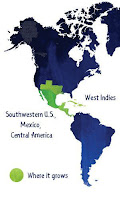
In addition to Southeast Asia, Aloe Vera production is exclusive to Central America and the Southwestern U.S. Did you know there are more than 40 ways aloe vera plants can improve your  health? Not only is aloe an incredible agent for soothing summer sunburns, but it can also act as a superfood for those brave enough to consume it. These benefits make growing aloe vera an extremely profitable livelihood for farmers that choose to pursue it Central America. Despite the unique economic value of aloe vera plants, smallholder farmers in Guatemala still face a major barrier to profitability. At La Floresta Aloe Farm in the Western Highlands of the country,  the resources required to cultivate a crop of plantlets for export are often  double what they should be. More than  50% of plants they grow are rejected due to mechanical damage during harvest, stunted growth, and improper herbicide spraying techniques. Poor plant nutrition has also resulted in extremely lo...

3 Ways to Tackle Waste Management in Low-Resource Settings

Image
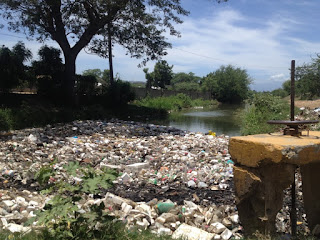
Plastic bottles pile up near a water source in the DR. Imagine it’s a Tuesday morning and you just rolled your trash can to the curb for weekly pickup. In a few hours, a garbage truck will swing by and you’ll never see that solid waste again; out of sight, out of mind. But in some regions of the world, this process isn't so easy. In the Dominican Republic, solid waste management is a huge challenge due to a lack of resources and limited space for inhabitants and landfills. Trash collection is virtually non-existent on the island and practices are unsafe for handlers where it does exist. Materials like plastic, pharmaceuticals, and fertilizers are often disposed of improperly, contaminating the water supply and posing a serious hazard to public health. In January, Farmer-to-Farmer volunteer Annette Poliwka traveled to the DR as a solid waste management specialist to assess local challenges through meetings with schools, universities and community leaders. Here are some impo...

Encouraging Conservation: Payment for Ecosystem Services

Image
In developed and developing economies alike, there is economic incentive to deforest land for other uses, such as farmland. This is because the crops can be sold at a profit, while leaving the forest alone results in no profit. However, although forests do not turn a profit by standing there, they provide a wealth of benefits to the communities that Deforested land in the DR surround them and to the global climate. For example, forests provide raw materials, promote soil fertility and prevent soil erosion, stabilize slopes and prevent landslides. Forests are spaces for hiking and adventure, provide habitat and shade, regulate local climates, and remove pollutants from the atmosphere and absorb and store carbon dioxide. The benefits of forests described above are all examples of ecosystem services. Ecosystem services are defined as any positive benefit that ecosystems provide to people. The UN sponsored Millennium Ecosystem Assessment recently identified the major categories of ec...

Report from the Field: F2F Volunteer Ryan Kesler at Jarabacoa Environmental School in the Dominican Republic - Part I

Image
It has been just over three weeks since I arrived in the Dominican Republic working for Farmer-to-Farmer and the National School of Environment and Natural Resources in Jarabacoa and it feels like I’ve been busy every moment. But, before I get into my experiences, I should probably tell you all just who I am. My name is Ryan Kesler and I am an undergrad student studying Spanish at the University of Wisconsin-Madison (UW). It is my final semester at UW and I am fortunate enough to spend it here in the DR. Here I get to practice not only my Spanish skills, but also my teaching skills as I am helping the Environmental School with their English classes. Thus far it has been an excellent experience and I would like to share some of my experiences with you all. For the first two weeks, I worked with Rick Hall and Maria Moreno, two additional Farmer-to-Farmer volunteers based out of the UW-Arboretum called Earth Partnership. Earth Partnership works with communities both in Wisconsin a...

Conservation Agriculture: 3 Keys to Reducing Soil Degradation

Image
Soil degradation, often caused by a combination of physical, chemical, and biological factors, is a serious issue that the majority of farmers throughout the world face. Although degradation occurs globally, it is of particular concern in tropical regions due to numerous factors including topography, climate, and highly weathered soils. Furthermore, climate change is exacerbating the problem, with heavy rainfalls and extreme weather events such as storms and floods causing increased soil erosion. Many of Partners’ F2F volunteers work with smallholder farmers and farmer associations throughout LAC to minimize soil degradation in their cropping systems, frequently through the use of conservation agriculture. F2F volunteer Dr. Andrew Egan investigates soil erosion and its impact on the Dominican Republic's Yaque del Norte watershed in March 2015. Conservation agriculture is a set of three soil management principles that greatly reduces deterioration of a soil’s structure, compos...

World Environment Day

Image
Plants in repurposed plastic bottles, Colombia Happy Friday! Today is World Environment Day (WED), which is dedicated to the United Nations mission to encourage global public awareness and action to benefit the environment. It’s a day to do something positive for the environment, so that individual actions become a collective movement for the good of the planet. This year’s theme is Seven Billion Dreams. One Planet. Consume with Care. According to the UN WED website , “By 2050, if current consumption and production patterns remain the same and with a rising population expected to reach 9.6 billion, we will need three planets to sustain our ways of living and consumption.” Compost pile, Guyana “Consuming with care” means living within our means as a global society so that future generations have the same opportunities to experience a healthy and diverse environment as we have had in the past. Living sustainably is about doing more and better with less. Our continued pro...

From The Schoolyard to the Riverfront: Watershed Education in the DR

Image
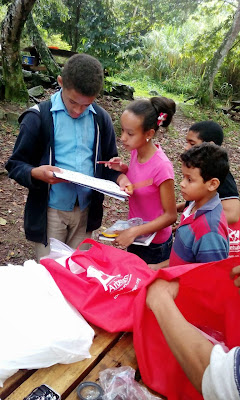
Dominican students at a nearby school participated in some of the environmental education activities In February 2015, F2F volunteers Maria Moreno and Rick Hall traveled to Jarabacoa, Dominican Republic to work with the Escuela Nacional del Medio Ambiente y Recursos Naturales de Jarabacoa, which trains students in environmental management, forestry, park management, eco-tourism and other related fields. Moreno and Hall went to help the school enhance students' knowledge and practice of environmental education and community outreach. Faculty and staff were involved in a week-long planning process for the development of a demonstration rain garden at the Environmental School, and participated in watershed exploration along the Jimenoa River. F2F volunteers, Rick Hall and Maria Moreno, lead hands-on learning at the Jarabacoa School Because environmental education is important for all age groups, the Colaboración Ambiental partnership was created between the Environmental ...

F2F and Plan Yaque Team Up in the Dominican Republic

Image
Partners is always looking to expand the reach of the Farmer-to-Farmer program and assist new organizations. In 2014, our F2F field staff met with Plan Yaque, a non-governmental organization with the mission to  Clean, protect, and sustain the Rio Yaque del Norte watershed for the benefit of its people. Plan Yaque  was established in 2011 and is located in the municipality of Jarabacoa. Plan Yaque has a lofty goal:  to guarantee access to water for all individuals who depend on the Yaque del Norte watershed . Not only does t he Yaque del Norte watershed provide drinking water to more than two million people, but it also irrigates the most productive banana, rice, and horticultural production areas in the country.   However, a s the DR continues to face the effects of climate change, it will become more challenging to meet the water demand of the growing population, which will jeopardize the country’s ability to sustain economic growth. In March 2014, Senior Prog...