Posts

Showing posts with the label NSP

International Year of Pulses
Image
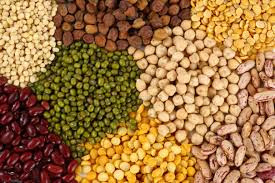
Pulses are eaten all over the world Since 1960, the United Nations has each year celebrated a different topic that deserves awareness or appreciation. 2015 was the International Year of Soils , and this year, the United Nations has declared 2016 the International Year of Pulses ! By designating this year, the UN Food and Agriculture Organization (FAO) aims to heighten public awareness of the nutritional benefits of pulses as part of sustainable food production aimed towards food security and nutrition. Pulses provide protein, complex carbohydrates, dietary fiber, vitamins and minerals. Like other plant-based foods, pulses contain no cholesterol and little fat or sodium. Pulses are annual leguminous crops yielding grains or seeds within a pod, such as lentils, beans, peas, and chickpeas. A vital source of plant-based proteins, they play an important role in nutrition for people around the world who do not have enough access to meat. In addition, pulses have nitrogen-f...
Highlights from 2015!

Image
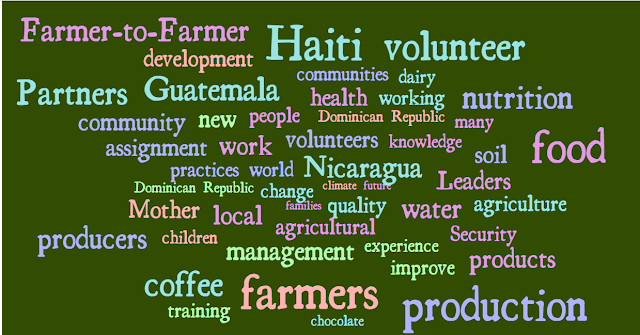
2015 has been a productive year for Partners' Agriculture and Food Security (AFS) Unit! Under the USAID-funded Farmer-to-Farmer (F2F) Program, 119 volunteers traveled to nine countries in Latin America and the Caribbean to work with close to 114 producer groups, NGOs, universities, and other hosts. Skilled professionals volunteered for a combined total of 1,905 days and directly assisted over 8,500 people. Partners' Haiti Nutrition Security Program, funded by USAID/Haiti as part of their Feed the Future Initiative, has recruited and is providing support to Mother Leaders who have been organized into 188 Care Groups.  Each Mother Leader is then responsible for leading local neighborhood women’s clubs, through which nutrition counseling and promotional support are provided to additional pregnant and lactating mothers of children under the age of five. As a result, the project is now reaching over 20,297 neighborhood women households. Top words from our 2015 blog posts: ...

Mother Leaders Bring Nutrition and Healthcare to Haiti

Image
This story was featured on the Partners blog, found here . Partners’ Haiti Nutrition Security Program (Haiti NSP) began educating women and families about healthcare in some of the most poverty-stricken areas in Haiti in 2013. Haiti NSP’s Senior Technical Advisor, Dr. Altrena Mukuria, presented her findings for the role Care Groups play in exposing Haitians to nutrition and healthcare information at this year’s annual American Public Health Association (APHA) Conference on November 3, 2015 in Chicago, Illinois. The conference brought together more than 12,000 public health professionals and research experts. Nearly one in every three Haitians does not have enough to eat, and women and children are especially vulnerable to the impacts of malnutrition. Dr. Mukuria’s presentation focused on the ways social capital can be used to decrease the levels of malnutrition in a community. Social capital is, “the network of relationships among people who live and work in a particular societ...

Haiti Celebrates International Youth Day

Image
O n August 12 th , several hundred Haitian young people gathered to celebrate International Youth Day. This day celebrates youth as partners in today’s global society, and promotes the engagement and participation of youth in sustainable development. Youth engagement is at the heart of the strategy of Partners’ Nutrition Security Program (NSP) for the promotion of good nutrition practices for sustainable change. Partners supports the Haitian Ministry of Health and Population by strengthening the capacity of community health workers and traditional birth attendants in nutrition. Partners has also improved coordination with health ministry staff and health institutions in order to achieve better coverage of services such as prevention, screening, referral and managements of cases of malnutrition. Young people aged 10-19 account for more than 37% of the Haitian population and can play a key role in the promotion and adoption of good nutrition practices. NSP and its local partne...

Happy Father's Day!

Image
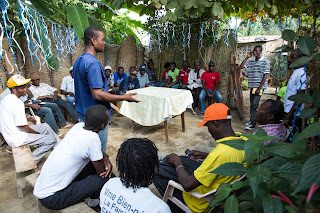
Father’s Day is a chance to celebrate and appreciate all of the dads around the world. This year, Partners is taking a closer look at the fathers involved in our Haiti Nutrition Security Program (NSP). NSP uses the care group model to spread knowledge among Haitian communities in order to improve the health and nutrition of pregnant and lactating women and children under the age of five. The program’s overall goal is to promote behavior change in nutrition in four geographic focus areas of Haiti in coordination with the Ministry of Health. The majority of the care groups are comprised of Mother Leaders, women who attend training sessions and then pass their knowledge onto other families in their neighborhoods. Men play a relevant role in the majority of development programs, especially at the domestic level. However, health programs and training opportunities typically are not designed to build men’s capacity to be responsible, competent husbands and fathers. To be successful, beha...

Mama Knows Best: Happy Mother's Day!

Image
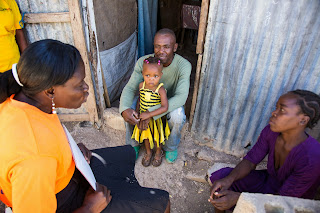
Happy Mother’s Day! Here at Partners of the Americas Agriculture and Food Security Team, we treasure mothers. There have been numerous articles about the positive effects of empowering and educating women, especially mothers, in developing nations (click the links to read more). Everyone knows how powerful mothers can be, and the mothers that work with the AFS Team are no exception. Back in March, we posted this blog entry for International Women’s Day about the Mother Leaders in the Haiti Nutrition Security Program, highlighting the inspiring work that Magalie Hubbert is doing in her community.  To honor World Health Day, we shared the story of Simone Fertile’s efforts educating about child nutrition, and then we celebrated the graduation of a Mother Leader class at the end of April. But that’s not all- recently Justin Hackworth (@justinhackworth on twitter) traveled down to observe and photograph some of the Mother Leader’s in action, working in their communities to ...

Mothers #MakeItHappen

Image
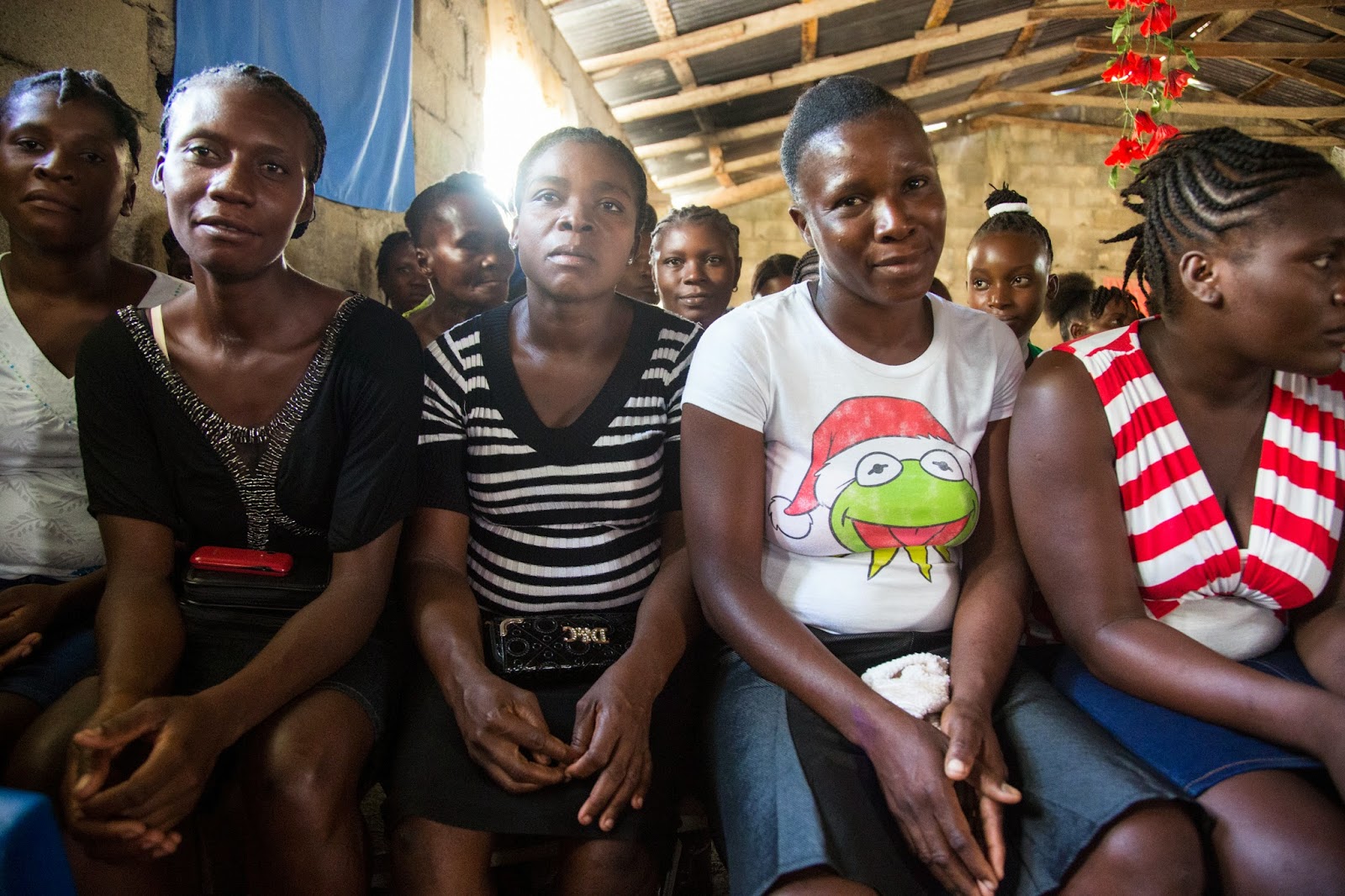
This past Sunday, March 8th, was International Women’s Day . For over 100 years, this day has and continues to represent an opportunity to celebrate the achievements of women, marked by thousands of events thrown by organizations, governments, charities, educational institutions, women's groups, corporations and the media to acknowledge the political, economic, and social achievements of women. The theme this year was Make It Happen, encouraging effective action for advancing and recognizing women. All over the world, women are making it happen as teachers, leaders, businesswomen, artists, and activists, as well as one more very important role. In Haiti, mothers Make It Happen. In the North of Haiti, more than 460 Mother Leaders are preparing to graduate from Partners of the Americas Nutrition Security Program (NSP), which is focused on improving maternal and child health through educating women about proper nutrition and empowering them to go into their communities and pass...

Haiti: 5 Years After the Earthquake

Image
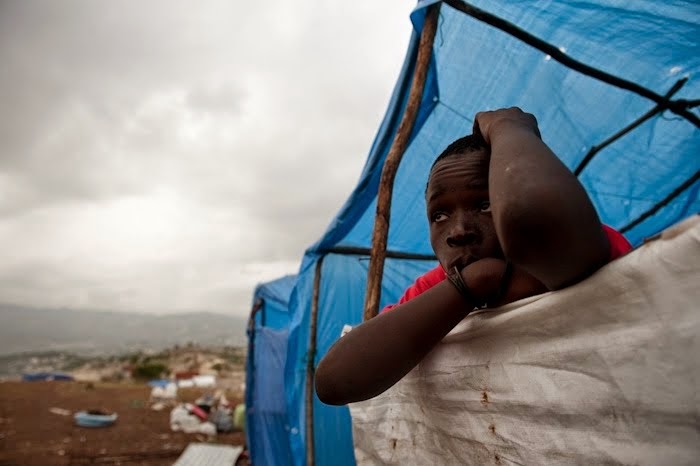
This week, Partners of the Americas joins people around the world in remembering the earthquake that devastated Haiti on January 12th, 2010. Our goal is to commemorate the event and give our readers some insight into the situation in Haiti. Partners' Farmer-to-Farmer Program was very active in Haiti in 2010 and we had a number of volunteers in-country during the tragedy. Thankfully, our volunteers and staff were safe and although Partners is not a relief organization, we did what we could to help - sending trauma counselors, using donations to help supply medicines, mobilizing farmers to provide food for the needy, arranging housing for people near hospitals, and more. Today, 5 years later, there is cause to be hopeful but we also want to recognize that Haiti is still facing many challenges.We asked Yves-Laurent Regis, the Deputy Director of our Haiti Nutrition Security Program , to share some observations about the state of Haiti and positive changes he has seen in the year...

Haiti Nutrition Security Program: An Update on Small Gardens

Image
Mother leader moving materials The Haiti Nutrition Security Program (NSP) is working with local organization Makouti Agro Entrerprise to identify the best options for small scale livelihood enhancement activities. These activities will vary based on local demand and feasibility but could include gardens and animal production, small business training, post-harvest processing and other value-added operations.  Partnerships with local Haitian counterparts increase the sustainability of interventions and are also essential in ensuring that NSP activities and strategies most appropriately and effectively meet the specific needs of malnourished populations, since each region of the country is culturally and economically distinct. Working with NSP field staff, mother leaders, and women’s clubs, Makouti has begun developing home gardens in target program areas. Each garden is under the management of one mother leader or women’s club and serves as a demonstration garden for all...

Haiti Nutrition Security Program

Image
While this blog is focused primarily on Partners of the Americas’ Farmer-to-Farmer Program, we sometimes cover related Partners’ programs as well as some broader agriculture and food security topics. One of these is Partners’ Haiti Nutrition Security Program (NSP). The NSP seeks to improve the nutritional status of pregnant and lactating women and young children in 3 geographic-focus corridors in Haiti. Launched in 2013, the NSP is funded by the USAID Feed the Future Initiative – a U.S. Government effort to combat global hunger and food insecurity. The NSP strategy hinges on a holistic community health, nutrition, and livelihoods approach that works through local NGOs and integrates assistance activities within the existing government health and nutrition systems. Building on the existing tradition of Mother’s Clubs in Haiti, NSP is using the care group model to deliver trainings, provide services, and communicate good health and nutrition behavior messages.  Care group mem...