Posts

Strengthening Public Relations for Colombian Natural Cosmetics Company
Image
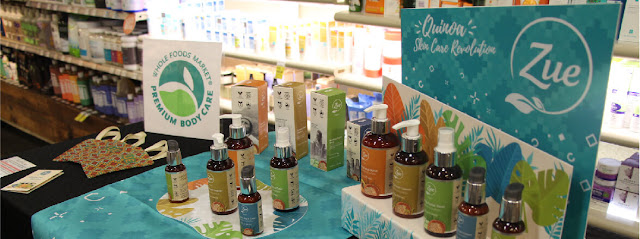
In March 2018, Kathleen (Kath) Lestina, a business owner and designer from the United States, traveled to Zen Naturals' headquarters in Cali, Colombia as a Farmer-to-Farmer (F2F) volunteer. The company's Zue Beauty line is a brand of quinoa-based natural cosmetics that emphasizes sustainable, ethical manufacturing and fair trade in order to improve the lives of quinoa farming communities in Colombia. Through Zue’s Give-Back program, customers are empowered to donate to Colombian organizations, contributing to the company’s two central goals: providing high-quality natural skincare products and generating social and environmental change.  F2F volunteers have been integral to the growth of Zue, as several agricultural and technical volunteers have helped train indigenous farmers to harvest quinoa. Other F2F volunteers have assisted with marketing, branding, and digital media. The purpose of Kath’s visit, the most recent F2F-Zen Naturals partnership, was to assist Zue’s publ...
Fruit Processing in the Ecuadorian Coast

Image
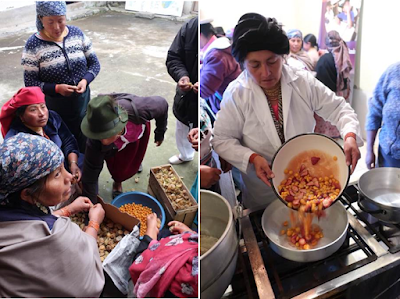
EducaFuturo is a program currently being implemented by Partners of the Americas in Ecuador and Panama. Funded by the US Department of Labor (USDOL), EducaFuturo seeks to combat child labor in both countries by providing educational programs, vocational training, and livelihood services. The Farmer-to-Farmer (F2F) program has partnered with EducaFuturo on numerous occasions over the past five years, sending 7 volunteers to support their efforts in improving the educational outcomes of youth involved in child labor, while also increasing the income opportunities of households to reduce their reliance on child labor. Volunteers have provided training on a range of topics, including sustainable production practices, processing, business management, and marketing. Most recently, University of Oklahoma Extension food specialist, Dr. Barbara Brown, traveled to the city of Otavalo, Ecuador to provide training to EducaFuturo participants on fruit processing and value-added products from ...

Marketing for Women-run Cooperatives and Youth-led Businesses in Nicaragua

Image
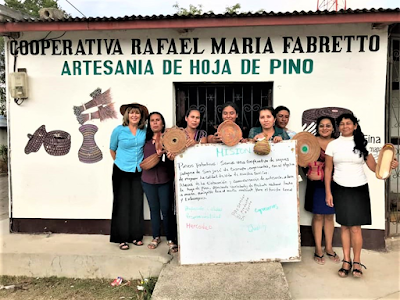
May 1-15, 2018, I had the pleasure of working with Noel Diaz, Program Officer, Farmer-to-Farmer Nicaragua, and Xenia Castillo of Fabretto Foundation Nicaragua to conduct workshops for three groups in Nicaragua. The main objective of this mission was to help them develop business plans, specifically marketing plans. Pinos Fabrettinos is a cooperative formed by 38 indigenous women in San Jose de Cusmapa who decided to take charge of their lives by making and selling pine needle baskets.  The first week, we worked with them to provide training on business plans, specifically details on Mission Statements, SWOT Analysis, and Marketing plans. I admired their lovely baskets in their show room, and commented about the Easter colors on some of them, and how an Easter basket would be nice. They were not familiar with Easter baskets. Since we had free wi-fi from the park next door, I showed them some Easter baskets on line. They said they would have the woman who could make baskets th...

From Puerto Rico to Nebaj, Guatemala: A Volunteer's Personal F2F Experience

Image
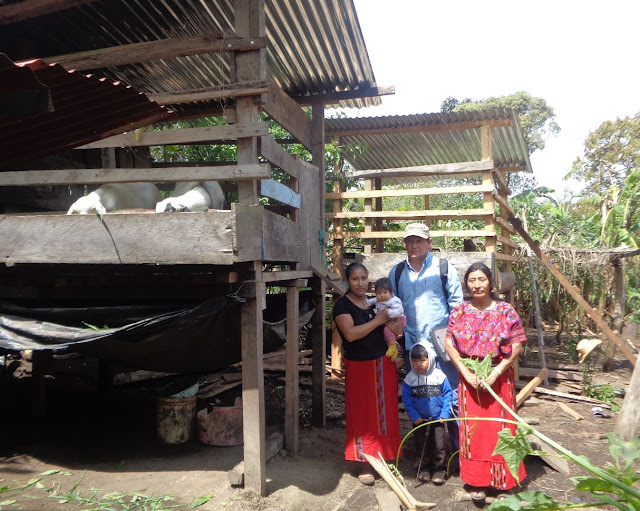
Written by F2F Volunteer Dr. Abner Rodriguez, Professor at the  University of Puerto Rico, Mayaguez Campus Located in Nebaj, Department of Quiché, Guatemala, Save the Children, with USAID and other funding agencies, developed the Goat Production Center of the Western Highlands, known by its Spanish acronym CEPROCAL (Centro de Producción Caprina del Altiplano). The project is focused on reducing malnutrition in families with children in Nebaj and other rural areas with the highest poverty rates in the country. In Guatemala’s Western Highlands, chronic malnutrition in children is the result of multiple factors, being the most important the lack of a good source of protein at the onset of the weaning period. Raising goats for milk production is the international agency and funding organizations strategy to alleviate the problem. During the last years, goat milk has been utilized for hundreds of families to improve children’s diets and as a product for local cheese production. In...

Soil and Water Conservation Engineering in the Dominican Republic

Image
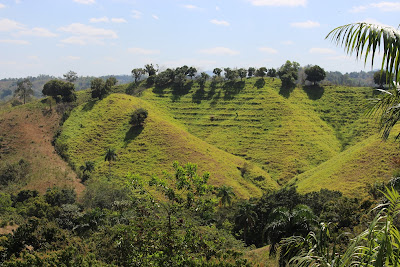
Written by F2F volunteer, John Tiedeman, April 15-29, 2018 Farmers are practical people wherever you find them in the world. Challenges in the Dominican Republic were to identify opportunities for soil and water conservation in the fertile Cibao Valley and surrounding mountains. Week 1 focused on a 160 acre ranch where goals include preservation of a remaining cacao plantation, plus demonstration of sustainable organic production methods.   Most acreage in the area of La Vega has been converted to intensive cultivation of cassava/yuca and bananas using synthetic fertilizers and pesticides. Adequate drainage and water supply are essential to healthy plant growth, whether in the humid climate of the D.R. or in the dry summer climate where I live in northern California.   For surface drainage, the starting point is to ensure an unobstructed outlet.   Although landowner Altair Rodriquez had installed hand-dug surface drains in her cacao plantation, the downstr...

A First-time F2F Volunteer's Experience in Nicaragua

Image
During my volunteer assignment in Nicaragua I had the opportunity to visit different cities to give workshops. At first, I was a little bit nervous because I’d never given any type of workshops before. I was really excited about it, but nervous at the same time. Even more when they told me that I was going to give the first workshop to teachers. The first workshop was called “Marketing Digital” and I gave that to the middle school teachers of the Collegio San Luis. This one, consisted of giving teachers different ideas and tools that they could use within their classrooms. During the workshop, I explained what social media is and what type of social media platforms are out there. I also explained them the different kinds of Technologies of Information and Communication (ICT) like computes and cellphones and the way we utilize them. I told the teachers what were the benefits of using new technologies and social media platforms. For example, how their students are always in touch with...

Mitigating soil erosion in the Dominican Republic

Image
Written by F2F volunteer Elizabeth Miernicki In March 2018, I traveled to the Dominican Republic for my first ever USAID-funded Farmer-to-Farmer (F2F) assignment. As my plane flew over the country towards Las Americas airport, my eyes never left the window. I could not stop thinking about what the soil looked like underneath all of the lush green foliage before my eyes. I soon found myself in a country three times smaller than my home state of Illinois, but with greater soil diversity. A true treat for me! Terraces in Mao formed by livestock walking along the contours. My F2F assignment specifically focused on improving soil management and water conservation practices to reduce soil erosion, increase soil fertility and improve water quality, with an emphasis on global climate change in the Ciabo Central region. The overall objective of the assignment was to provide vulnerable farming communities with the necessary strategies and technologies to improve the resiliency of t...

Marketing for Products with a Story: An F2F Volunteer's Experience in Colombia

Image
By F2F volunteer, Rebecca Roebber Marketing is changing so fast with the influence of social media and access to the internet. There are so many products we are exposed to everyday, when we open our Instagram or browse through Facebook, companies send us emails with discounts and new products. How do we know what to buy anymore? We are all looking to purchase products that speak to us, that stand out compared to other products. Great marketing shows us products that represent who we are, who we want to be, and what we believe in. I bet that if you look at some of the products you’ve recently purchased, you’ve felt that personal connection, even if you didn’t recognize that the company is working to connect. An example of a connection that brands make with the customer is a chocolate company called “Endangered Species,” their brand is sold at Whole Foods and other natural grocery store and reaches a large audience that care about animals in the rainforest, that is a pretty...

A Passion for Nurturing Body and Soul Through Healthful Foods & the Important Role of a Business Plan

Image
Written by Russ Webster, F2F Volunteer, Guatemala New logo featuring Marco Barbi, created by F2F volunteer Melissa Delzio Yogi-Superfoods has a great set of products, and a great story, both driven by the passion of its founder and owner Marco Barbi. Yogi began in Marco’s kitchen in 2014. Italian by birth, Marco immigrated to Guatemala in 2008 to pursue a more meaningful life through good health and spiritual growth. He sought to help others too on their personal journey through his inspirational books, yoga instruction, and meditation classes. During this time, Marco also began preparing organic health foods such as kombucha, kefir, tahini, and ghee in his kitchen, with each recipe aimed at delivering nutritious, natural sustenance to the body. Marco knew too, through his own experience, that healthy foods help not only the physical body but promote a positive state of mind and emotional health as well—"health body and happy soul,” as Marco liked to say. He shared his f...

Strategic Planning for the Cuenca Media of the Yaque del Norte Watershed in the Dominican Republic

Image
F2F volunteer, Michael Viola, recently traveled to the Dominican Republic to work with Plan Yaque, a non-governmental institution that combines efforts between the state and civil society for the protection, conservation, and sustainable management of natural resources of the Yaque del Norte River Basin. Its fundamental purpose is to contribute to regional and national development towards the construction of a better and sustainable quality of life in the Dominican Republic. The purpose of this assignment was to focus on the middle zone, Cuenca Media, of the northern Yaque River watershed that consists of 19 micro-watersheds and supplies approximately 11% of the total area. At the end of last year, a meeting was held with various governmental, academic and political stakeholders to discuss the development of a sustainable development plan for the watershed. As part of this effort, Michael’s assignment was to create a comprehensive proposal specifically focused on the Cuenca Media...