Posts

Small Business Development: Haiti
Image
Jim Crandall training new entrepreneurs. Small business development is a multi-dimensional and fluid process. In Haiti, programs like F2F and Makouti Agro-Enterprise support farmers in establishing a production system – an essential component to starting a business. By providing person-to-person, hands-on training, F2F and Makouti contribute to increasing producers’ chances of success. In addition to a healthy, efficient production system, a business needs a business plan to guide decisions about facilities, production, and marketing, with an eye towards profitability and long-term sustainability. This past June, F2F volunteer Jim Crandall applied his experience in cooperative business development to assist producer networks in Haiti. His focus was on enabling producers to make business decisions based on the network as a whole, not just on individuals. Jim spent his first week in the Port-au-Prince area working specifically with two rabbit producer associations. He led sessi...

F2F Teams up with Colombia's SENA to Boost Fruit Industry in Department of Huila

Image
F2F volunteer Dr. Robert Paull of the University of Hawaii at Manoa Huila, 1 of Colombia’s 32 departments, is recognized nationally for its tropical fruit industry. Located in the country’s southwest region, Huila boasts 25 tropical fruit species spanning 10,699 hectares (26,438 acres), and is Colombia’s number 1 producer of passion fruit and pineapple. That said, Huila’s fruit industry is currently performing below the national average, considered to be the result of a lack of direct assistance and improved technologies at the producer level. To address this issue, Colombia’s National Learning Service (SENA) has linked up with Farmer to Farmer to facilitate collaboration among U.S. tropical fruit specialist, Dr. Robert Paull, SENA instructors, and Huila’s fruit producers. Dr. Paull, Chairman of the Department of Tropical Plant & Soil Science at the  University of Hawaii at Manoa, has been in Huila since September 8th to learn about tropical fruit produ...

Colombia’s Amazon World Ecological Park: Marketing Aromatic Teas One Year After F2F Volunteer Visit

Image
In November of last year, Farmer-to-Farmer Volunteer Matthias Resien had taken a trip to Leticia, Colombia to provide training to staff at the Amazon World Ecological Park regarding dehydration techniques for making teas, packaging them, and developing marketing strategies. The park, which opened in 2011 and is known for its sustainable use of biodiversity, has many different species of aromatic plants that have large potential in the tea market, particularly for tourists visiting the park. Matthias’s visit was essential in getting the business started by helping to build a drying structure at the park and showing how to blend different herbs for aromatic teas that will be sold. Today, almost one year later, park staff are now selling tea to visitors and are in the process of expanding their market even more. They continue to make improvements to the drying house to adapt to local environmental conditions and create a stronger structure. In the future, they are looking into desi...

F2F Small Animal Volunteer Myriam Kaplan-Pasternak Makes 15th Visit to Haiti

Image
Rabbits are a good source of nutrition and income for smallholder Haitian farmers Long-time Farmer-to-Farmer (F2F) Volunteer Myriam Kaplan-Pasternak recently returned from her fifteenth trip to Haiti in seven years. As a Doctor of Veterinary Medicine from California, Myriam has had a unique volunteer experience in that she’s been able to follow the progression of the rabbit industry in Haiti, with rabbit meat becoming increasingly accepted on a larger scale as a viable source of nutrition and income for smallholder farmers. When Myriam first started volunteering with F2F in Haiti in 2006, there were fewer than 100 rabbit producers in the country, and only one of them was also eating the rabbits she raised. Today, with the help of F2F and Makouti Agro-Enterprise, this number has grown to over 1,000 producers with almost all raising rabbits for both personal consumption and sale. Boiling and mixing cassava to include in rabbit feed blocks Myriam’s most recent visit to Hait...

Professor of Forestry, Charles Ruffner, Promotes Agroforestry in the Dominican Republic

Image
 Farmer to Farmer volunteer Charles Ruffner with Dominican producers Last month, the community of El Cercado, San Juan in the Dominican Republic received a visit from Charles Ruffner, a Forestry Professor at Southern Illinois University. During his visit, Charles worked with the San Pedro and Pablo Federation, a nongovernmental organization of 21 farmer associations and 600 subsistence farm families that helps producers implement agroforestry practices on their farms. Agroforestry is a farming technique that involves planting fruit, nut, and woody trees on the farm with a variety of crops. Charles’s role during his week-long visit was to help farmers map and plan these planting schemes so they could not only lessen the environmental impacts of their farming practices but also improve their incomes.  Smoke in the mountains - a result of slash-and-burn agricultural techniques Agroforestry is being promoted as a farmer-friendly way to reduce the negative impacts of...

Survey of Jamaican Beekeepers Reveals Significant Improvement in Beekeeping Knowledge and Capacity

Image
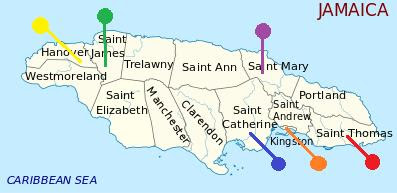
Tom Hebert, Returned Peace Corps Volunteer, beekeeper and English teacher who resides in Intibucá, Honduras, spent the month of July working with beekeeping associations in 6 of Jamaica’s 14 parishes. This was Tom’s second visit to Jamaica – following his first Farmer to Farmer (F2F) assignment in July 2012 – and the 8th F2F assignment focused on low-cost, sustainable beekeeping in Jamaica in the last year. Tom’s 11 hands-on training sessions focused on building top-bar hives, hive management, and making home-made pollen traps and foundation molds – skills identified by the associations as areas where they needed to increase their capacity. Of the 72 recorded participants, 66.6% had attended a previous F2F beekeeping training, and just over 25% were present at Tom’s first session in 2012. Two summer interns at Yerba Buena Farm in St. Mary parrish accompanied Tom to his trainings and conducted a survey of the 72 participants to gain a better understanding of why they were intere...

Aquaculture Training at the University of Guyana Seeks to Breed a New Pool of Fishfarming Specialists

Image
 Pond-side discussion of duckweed-based feeds at the Trafalgar Union Fish Farm  Former Associate Professor of Aquaculture at the University of Arkansas Pine Bluff, Dr. Peter Perschbacher, traveled to Guyana from May 30th - June 18th in response to a request for training by the University of Guyana - Turkeyen Department of Agriculture & Forestry. The University of Guyana - Turkeyen Campus, located in the capital city of Georgetown, asked Dr. Perschbacher to provide training in sustainable aquaculture to students and faculty, as well as interested farmers, government extension workers and entrepreneurs. The goal: to prepare a pool of aquaculture technicians and researchers, as well as to prepare a lecturer to succeed an outgoing aquaculture professor. The highly prized and priced hassar food fish  Dr. Perschbacher's nearly 3-week visit included a 2-day session attended by 33 participants, a 5-day session attended by 10 participants, and 4 days of field ...

"We can make a difference in small ways and at a very human level. Caring does matter."

Image
Amelia Canilho and Jean Tice recently returned from a Farmer-to-Farmer   assignment in Nicaragua. Both Canilho and Tice are educators and residents of Wisconsin. The team complemented each others skills in teaching and assisting over 100 Nicaraguan youth and adults with tips on home gardening, square foot gardening, family nutrition, food preservation, new food product development, and value-added processing and marketing. They worked with five community learning centers near the cities of Managua and Rivas, and also attended portions of the EXPICA Agriculture Expo and the National Cattleman's Congress. Discussing a healthy snack program at local elementary school At each learning center the team got a tour of the farms and facilities. They then conducted a general needs assessment through a short questionnaire and discussion with leaders of the center and active members. Together with the groups they developed activities for the following day that addressed the center's...

First F2F Beginner Beekeeping Class in Haiti

Image
Sean (center) with family of new beekeeper (left) For two weeks in July, Washington DC resident and beekeeper Sean McKenzie volunteered in Haiti to put on the first ever Beginner Beekeeping Class conducted by the Farmer to Farmer Program. This course has been a long time in the making, satisfying the demand to bring new beekeepers - especially more women and youth - into the trade. With this training, those who formerly did not have access to this type of training received the information needed to embark on a new environmentally-friendly economic activity, and help revitalize the beekeeping industry in Haiti. Sean McKenzie is a beekeeper, queen breeder, entrepreneur, and beekeeping course instructor at the University of the District of Columbia. Below are photos sent from our field staff:

Farmer-to-Farmer Interviews

Image
While they were visiting Washington, DC recently, several Farmer-to-Farmer Field Staff members and one of our volunteers were interviewed about their involvement in the program. Click on the video below to find out more!